Clicks are easy to track, but that doesn’t mean they fully measure performance.
In video advertising, especially on YouTube, clicks and click-through rate often overshadow what actually determines success: where ads appear, what content surrounds them, and whether those environments influence real buying behavior. Solely relying on CTR as a measure of performance pushes many advertisers to optimize towards the wrong direction.
This gap isn’t theoretical. Even Google itself does not rely on clicks to measure video advertising effectiveness. Instead, YouTube uses Brand Lift studies to measure outcomes like ad recall, brand awareness, and consideration by comparing exposed and unexposed audiences.
To understand video effectiveness, it helps to understand why clicks were never designed to measure it.
Why CTR Breaks Down for Video Advertising
Video placements are used to build awareness and shape perception long before a conversion happens, but their success is measured by downstream metrics. The issue isn’t the format. It is how performance is measured.
CTR Fits Search, Not Video
CTR was built for intent-driven channels like search, where a click often signals readiness to act. Someone searches, sees an ad, clicks, and takes action. Measuring success through clicks makes sense there. Video advertising doesn’t operate in that environment.
Video Works Before Intent
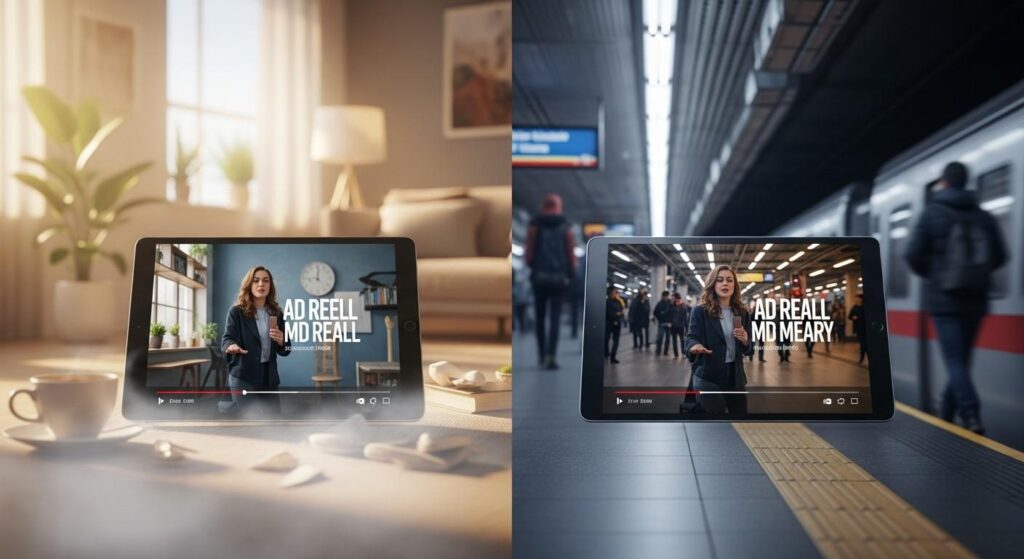
Video ads appear while people are watching content, learning, or relaxing. They’re most likely not seeing these ads while they are actively looking to make a purchase. The role of video is to influence awareness and trust, not to trigger immediate action. CTR measures interruption. Video performance depends on recall, relevance, and context.
Why This Causes Bad Decisions
When CTR is used to judge video performance, results get misread. High CTRs can hide wasted spend. Low CTRs can lead teams to cut placements that are actually building influence. This is why clicks alone fail to explain video advertising effectiveness.
How Video Advertising Actually Influences Decisions
If you watch how people actually consume video ads, the limitations of measurement by click volume become quickly obvious.
If someone is watching YouTube, they are most likely there to passively consume content. They’re not comparing items, weighing options, or looking to be interrupted. The ad is part of the viewing experience, not a separate moment. That, alone, changes how performance should be judged.
-
Awareness Channels Work Before Intent Exists
Search ads usually show up after someone already knows what they want. Video ads show up earlier, often before the person has any awareness of the product at all. The job of the ads isn’t to close a loop, but to open one.
That distinction gets lost when everything is measured in the same way as search. If you expect video to perform like an intent placement, it’s performance will look underwhelming, even when it’s doing exactly what it’s supposed to do.
-
Clicking Is Not How People Respond to Video
Most people do not click video ads because clicking is awkward and disruptive. Clicking pulls them out of the content they are watching. On CTV, it’s barely even possible. On mobile, it usually happens by accident. Even on desktop, it’s rarely the natural response.
Low CTRs aren’t a sign that video ads are being ignored. They’re a sign that people are naturally watching video content.
-
Influence Shows Up Later, Not in the Moment
What video placements are good at is building familiarity. Someone sees a brand a few times in the right context. They remember it. Then, days later, they search for it, visit the site directly, or recognize it when comparing options somewhere else.
From a reporting standpoint, the video ad gets no credit for that, and a different channel takes the win. But, if you were to remove awareness tactics from a campaign, the downstream metrics would more than likely suffer.
Video advertising works upstream of the metrics most clients rely on, which is why it keeps getting misjudged.
Why High CTR Can Be Actively Misleading
A high CTR feels like success. In video advertising, it often isn’t.
-
Accidental Clicks Create False Signals
Mobile video ads tend to produce higher CTRs because:
- Screens are smaller
- Ads sit close to navigation elements
- Scroll behavior increases accidental taps
These clicks inflate performance metrics without increasing intent or conversions.
-
Low-Quality Content Can Generate Clicks
Certain environments consistently drive clicks:
- Kids content
- Sensational or shocking videos
- Clickbait-style creators
- AI-generated spam
These placements may look “engaging,” but they rarely deliver qualified outcomes. CTR does not distinguish between quality and noise.
-
CTR Rewards Attention, Not Relevance
Highly stimulating content attracts clicks. Relevant content builds trust. CTR favors the first and video performance depends on the second.
Why Zero-Click Performance and Placement Quality Go Hand in Hand
Some of the strongest video ads generate little or no click-through activity. This is common in CTV, long-form YouTube, and premium creator content. In these environments, performance usually looks like:
- Low click activity
- Strong brand recall
- Better downstream conversions
This is normal behavior. People don’t stop watching videos to buy. They remember the brand and act later through search, direct visits, or other channels, which means CTR often misses the real impact. Where that influence shows up depends on placement.
On YouTube, ads can run across everything from trusted creator content to kids content and low-quality spam, yet CTR treats all impressions the same. Context matters, and without knowing where ads actually ran, it is hard to judge ad performance without clicks.
Metrics That Explain Video Performance Better Than CTR
CTR shouldn’t disappear. It should be demoted. To understand video advertising effectiveness, clients must look at metrics that reflect influence, not just interaction.
Incrementality and Lift
Did the ad change behavior, or would the conversion have happened anyway?
Incrementality testing shows whether video ads create real demand.
View-Through Conversions
Many viewers see an ad and return later without clicking. View-through data captures this delayed influence.
Brand Recall and Favorability
Video ads build memory. Memory predicts future buying behavior. Recall is often a stronger signal than clicks.
Cost Per Outcome and Lifetime Value
Video ads placed in relevant environments often drive:
- Higher-quality customers
- Better retention
- Higher lifetime value
CTR doesn’t show this.
Contextual Alignment
Content relevance is one of the strongest predictors of video performance. CTR can’t measure context. Placement intelligence can.
Where Advertisers Commonly Go Wrong
Most video performance problems aren’t caused by weak creative or low budget. They come from applying search-style logic to a channel that works very differently. When clicks become the main signal of success, decisions drift away from how video actually drives impact.
-
Optimizing Video Around CTR Benchmarks
CTR benchmarks were built for intent-driven channels. Using them to judge video performance pushes teams to optimize for interaction instead of influence, which often undervalues placements that build awareness and recall but don’t generate clicks.
-
Cutting Placements That Drive Influence, Not Clicks
Some video placements do their job quietly. They build familiarity and shape perception but rarely produce immediate interaction. When CTR becomes the filter, these placements are often paused or removed even though they contribute to downstream results.
-
Scaling Without Understanding the Environment
As campaigns scale, inventory expands quickly. Without visibility into where ads are running, clients end up funding placements that are irrelevant or low quality. CTR rarely exposes this because clicks can still happen in the wrong environments.
-
Trusting Automation Without Verification
Automation favors scale, not context. When placements are left entirely to algorithms, ads can drift into content that technically performs but strategically harms the brand. Without verification, these issues stay hidden in reports.
CTR can make these decisions look reasonable on paper. Over time, they weaken video performance.
How Filament Addresses the Real Problem
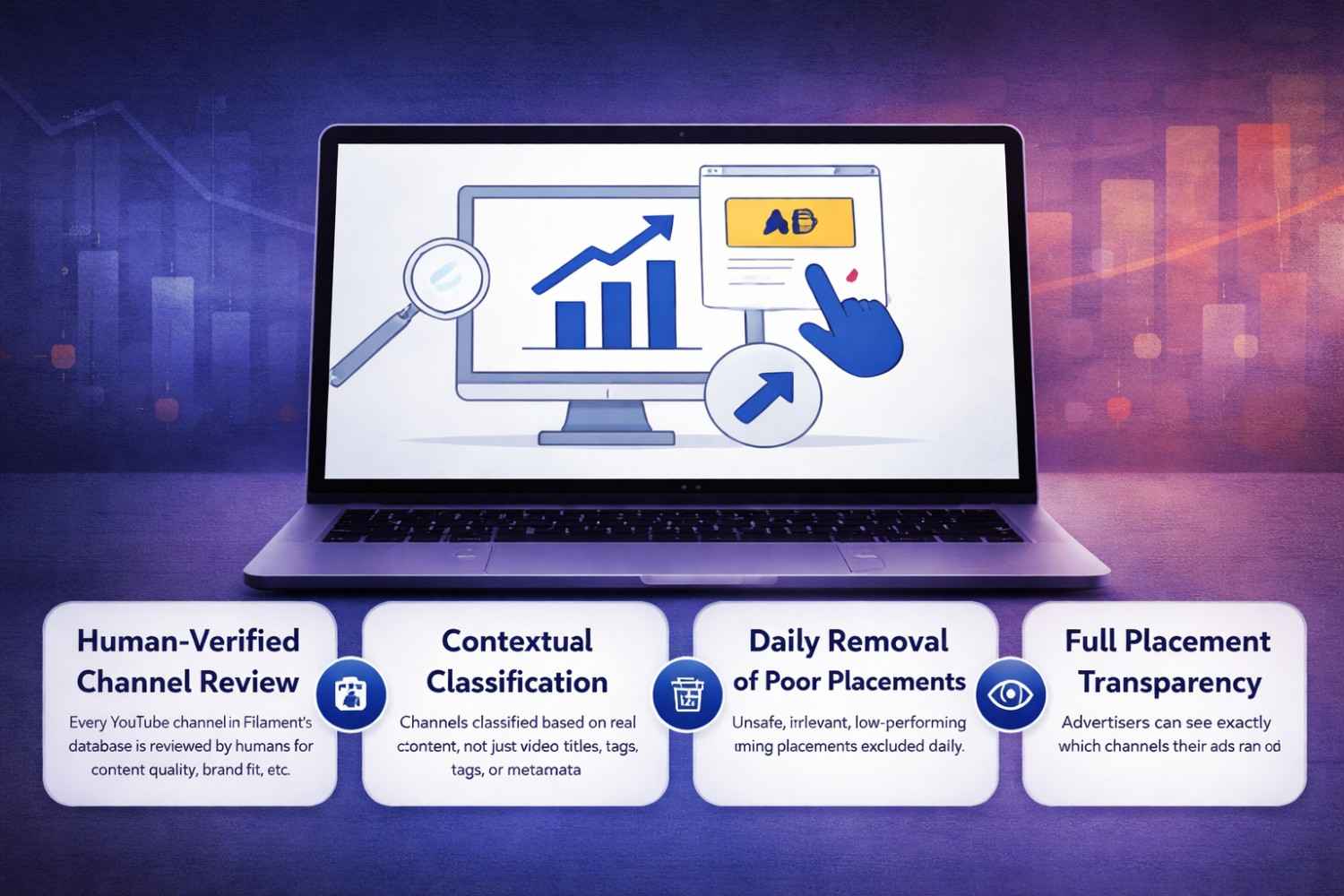 How Filament Addresses the Real Problem[/caption]
Most video performance issues aren’t caused by creative or bidding. They come from ads running in the wrong places. CTR can’t show this because it doesn’t show where ads actually appeared or what content surrounded them. That’s the gap Filament exists to solve.
-
Human-Verified Channel Review
Filament doesn’t rely on automation alone. Every YouTube channel in our database is reviewed by humans to assess content quality, context, brand fit, and audience relevance. This catches nuance and edge cases that algorithms routinely miss.
-
Contextual Classification That Reflects Reality
Filament classifies channels based on what the content is actually about, not just video titles, tags, or metadata. This ensures ads align with what viewers are truly watching, not what a system assumes they are watching.
-
Daily Removal of Poor Placements
YouTube inventory changes constantly. Filament updates exclusions daily, removing unsafe, irrelevant, or consistently low-performing placements before they turn into sustained wasted budgets.
-
Full Placement Transparency
Advertisers can see exactly which channels their ads ran on. There are no black boxes or vague labels, only clear visibility into real environments.
What Effective Video Measurement Looks Like Today (and Where It’s Going)
Start With Placement, Not Engagement
Teams that perform well with video advertising do not begin by chasing engagement metrics. They start by understanding placement. Before looking at clicks or conversions, they look at where ads ran, what content surrounded them, and whether those environments were appropriate for the brand and the message.
Measure Influence Before Interaction
Once placement is understood, performance is evaluated across the full funnel. Influence is measured before interaction, not after. Video is treated as a channel that shapes demand, not one that simply captures it. Clicks still appear in reporting, but they are used as a diagnostic signal rather than a success metric.
Why Measurement Is Changing
Video now takes up more budget, so teams are paying closer attention to what actually works. Clicks alone are not giving clear answers. More focus is shifting to where ads run, who sees them, and whether those placements make sense for the brand. Context and visibility are starting to matter more because they affect outcomes directly.
Why Human Verification Matters
Automation helps with scale, but it doesn’t explain where ads really showed up. Without someone checking placements, it is easy to draw the wrong conclusions from performance data. Clicks will still show up in reports, but they are no longer enough to judge whether video advertising is working.
Conclusion: Influence Over Interaction
Clicks were never meant to explain video advertising. They measure momentary interaction, not influence. They reward attention, not relevance. When used in isolation, they push optimizations in the wrong direction.
To understand video performance, brands need to measure what actually drives results: context, placement quality, and the ability of an ad to influence decisions over time. If you want to know how your YouTube ads are truly performing, start with where they appear. Learn how Filament helps advertisers eliminate wasted spend and place ads where influence happens.
Frequently Asked Questions:
Why is CTR a poor metric for video advertising?
CTR measures clicks, not influence, trust, awareness, or delayed conversions, which are core to video performance.
Can video ads perform well without clicks?
Yes. Most video influence happens without clicks and appears later through search, direct visits, or purchases.
What metrics should replace CTR for YouTube ads?
Incrementality, view-through conversions, brand recall, and cost per outcome provide a clearer picture.
How does placement affect video ad performance?
Ads placed next to relevant, trusted content perform significantly better than ads shown in low-quality environments.
How does Filament improve video ad measurement?
Filament ensures ads run only on human-verified, contextually relevant YouTube channels with full transparency.

I’m a results-driven marketing leader with 10+ years of experience building integrated media strategies that drive measurable ROI. As COO and co-founder of Filament, I shape the product roadmap, sales, and campaign performance. My background spans brand and performance media for top brands like Slack, Bumble, and Jenny Craig. A frequent speaker on measurement, I bring deep expertise in ad tech, data strategy, and media buying—always with a sharp focus on business impact. Previously I founded an attribution company, where I led campaign planning, attribution modeling, and executive-level reporting across TV, digital, and CRM channels.