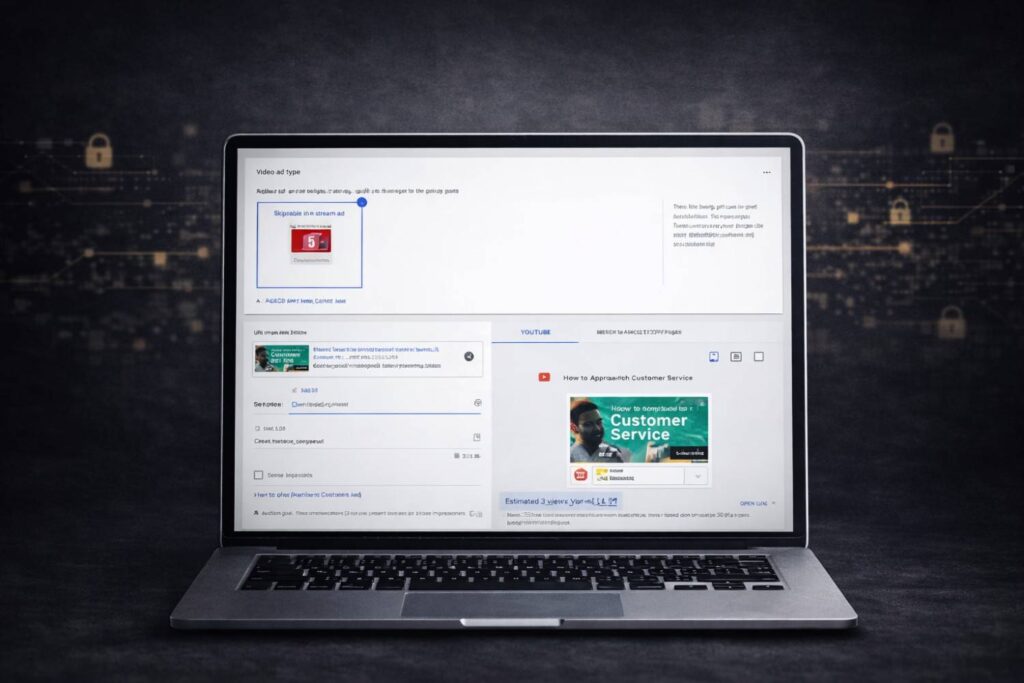
YouTube is one of the most powerful growth channels for DTC brands. In a Google-commissioned BCG study, over half of viewers said digital video influenced their awareness and purchase decisions, making YouTube a channel that actively shapes buying behavior.
When we review YouTube campaigns, we consistently see strong creatives and solid targeting undermined by poor placement decisions. Ads appear in the wrong environments. Budgets leak into low-intent content. Performance drops, and teams assume the problem is creative assets or bidding.
This article breaks down the top YouTube ad placement mistakes we see across DTC campaigns and how brands can avoid them without rebuilding their entire media strategy.
Why YouTube Ad Placements Matter More Than Most Teams Think
Most advertisers focus on audiences, bids, and creatives. Placements are often left to automation or treated as a checkbox setting. In practice, placements determine three critical things:
- the mindset viewers are in when they see your ad
- how your brand is perceived in context
- whether your spend reaches buyers or drains into noise
Two viewers can belong to the same audience segment and behave very differently depending on the content surrounding an ad. Context matters.
Even small placement issues compound over time. What looks like a few percentage points of inefficiency often becomes significant wasted spend at scale.
How Placement Issues Show Up in Real Campaigns
Here are the most common placement issues we uncover when auditing YouTube campaigns:
Common Placement Problems We See in Audits
Placement Issue | What We Commonly See | Business Impact |
Kids content adjacency | Ads served on videos watched by children | Zero purchase intent, wasted spend |
Irrelevant creators | Content unrelated or harmful to the brand | Weak engagement |
Foreign-language videos | Ads outside target markets | Wasted budget and skewed reporting |
Low-quality or spam content | AI-generated slop or videos solely made for advertisements | Brand trust erosion |
Overblocked inventory | Excessive exclusions | Higher CPMs and reduced scale |
These issues rarely show up clearly in aggregate dashboards. They live at the placement level, where most teams aren’t looking.
The Most Common YouTube Ad Placement Mistakes We See
1. Assuming YouTube’s Default Brand Safety Is Enough
We often see brands rely entirely on YouTube’s built-in brand safety controls. Those controls help, but they’re not designed to account for nuance. Brand safety isn’t binary. Content can be technically safe and still be a poor environment for your brand.
How we recommend avoiding it
Define brand-specific suitability rules and combine automation with human verification. Human review catches tone, context, and relevance that machines miss.
2. Treating Audience Targeting as a Proxy for Relevance
Audience targeting determines who sees your ad. Placement determines where they see it. A user researching skincare can be watching a tutorial, a comedy sketch, or unrelated entertainment. The same person behaves very differently in each environment.
How we recommend avoiding it
Layer contextual targeting so ads appear next to content aligned with buyer intent, not just audience traits.
3. Letting Performance Campaigns Run Without Daily Exclusions
Without daily exclusion hygiene, irrelevant placements slowly creep back in. Kids content, low-quality channels, and off-market videos reappear over time. This is one of the most common causes of silent budget waste.
How we recommend avoiding it
Use daily exclusion lists to automatically remove unsuitable placements as they appear. Performance campaigns need constant hygiene, not one-time cleanup.
4. Relying on AI Alone to Judge Context
Automation is powerful, but it lacks judgment. Algorithms classify patterns, not intent. We regularly see placements that technically match targeting rules but feel completely wrong for the brand or campaign goal.
How we recommend avoiding it
Pair AI with human verification. Human review evaluates nuance, tone, and suitability at the channel level.
5. Using the Same Placement Strategy Across the Funnel
Awareness, consideration, and performance campaigns have different objectives. Using one placement strategy for all three limits results. Safe scale works for awareness. It does not work for conversion-driven campaigns.
How we recommend avoiding it
Align placement strategy with funnel intent instead of applying a single rule set across all campaigns.
How We Think About Placements Across the Funnel
Funnel Stage | Placement Focus | Why It Matters |
Awareness | Brand safety and scale | Builds trust without limiting reach |
Consideration | Channel topic and contextual relevance | Improves audience engagement and recall |
Performance | Relevance and daily exclusions | Protects budget and conversion efficiency |
6. Ignoring Low-Quality and Spam Content
Not all harmful content is flagged by default systems. Low-effort, misleading, or slop videos often slip through. These placements damage brand perception and drag down performance.
How we recommend avoiding it
Evaluate channel quality signals and exclude content that fails baseline standards, even if it’s technically brand safe.
7. Looking Only at Aggregate Metrics
When reporting stays at the campaign level, placement problems stay hidden. CTR, VTR, and CPA averages mask underperforming environments.
Google’s engaged-view conversion reporting shows that YouTube ads can drive conversions even when users do not click the ad, attributing conversions after a viewer watches at least 10 seconds of a skippable in-stream ad.
How we recommend avoiding it
Review channel-level placement data. Identify patterns tied to performance outcomes, not just spend distribution.
8. Overblocking Inventory in the Name of Safety
Some brands block aggressively to avoid risk. The result is reduced scale, inflated CPMs, and missed opportunities. Safety without relevance creates inefficiency.
How we recommend avoiding it
Focus on suitability and relevance instead of broad category bans. Block what actually hurts performance, not what feels uncomfortable by default.
9. Blaming Creative Before Checking Placements
When performance drops, creative is often blamed first. In many audits, the creative is not the issue. Even strong creative underperforms when shown in the wrong environments.
How we recommend avoiding it
Evaluate placement quality before changing creative. Better placements often lift results with existing assets.
10. Treating Placement Audits as a One-Time Task
Placements change daily. New channels emerge. Content quality shifts. One audit does not solve an ongoing problem.
How we recommend avoiding it
Establish a regular audit cadence. Continuous review prevents small issues from becoming expensive ones.
How We Help DTC Brands Fix YouTube Placement Issues at Scale
 YouTube Ad Placement[/caption]
We built Filament to solve a simple but persistent problem in YouTube advertising: brands don’t know where their ads are actually running, and automation alone can’t reliably decide what’s relevant or suitable.
Our platform combines automation with expert human verification to give brands placement clarity across every campaign type.
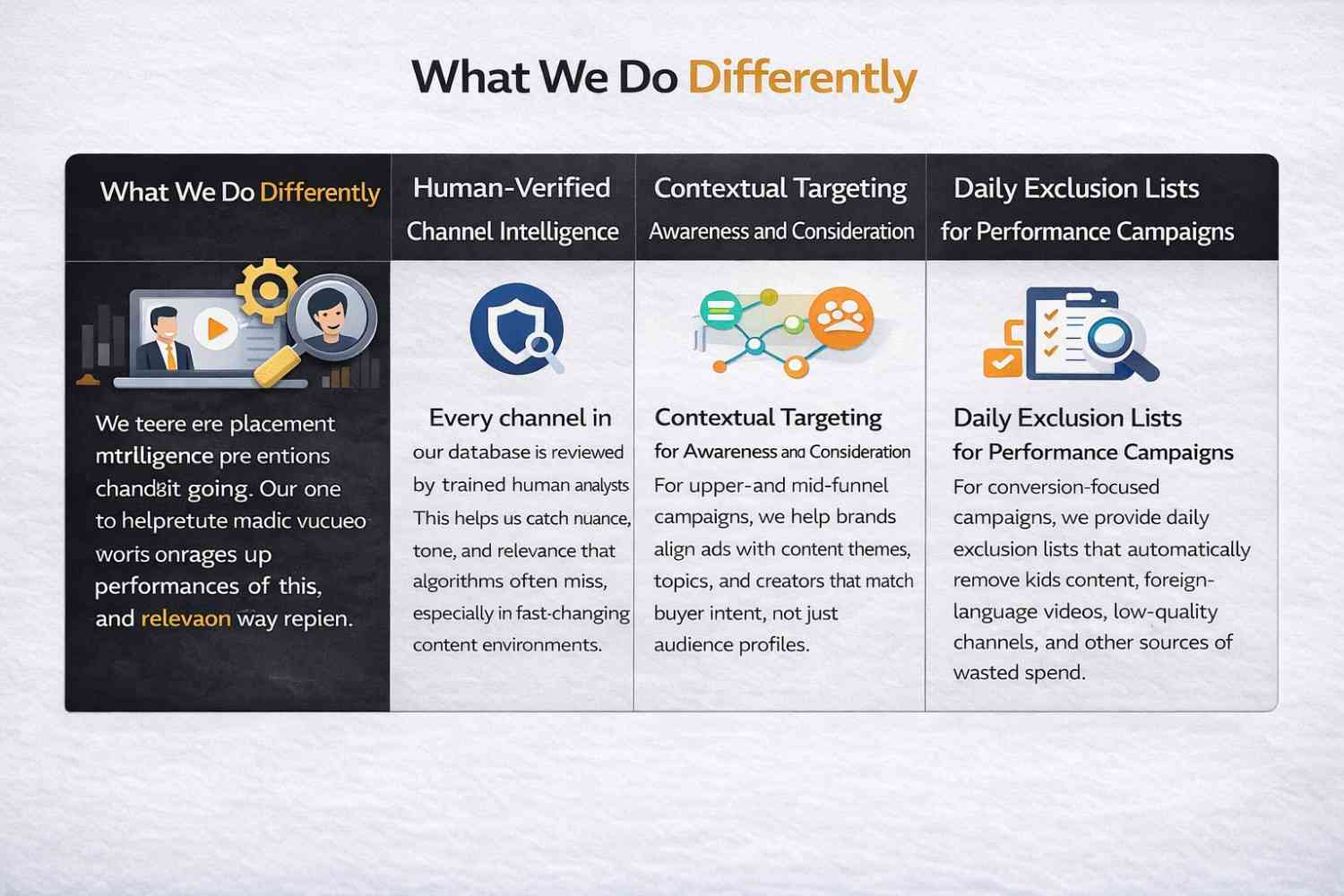
What We Do Differently
We focus on placement intelligence, not creative or media buying. Our role is to help advertisers control where ads appear so performance, safety, and relevance stay aligned.
Here’s how we support DTC YouTube campaigns:
1. Human-Verified Channel Intelligence
Every channel in our database is reviewed by trained human analysts. This helps us catch nuance, tone, and relevance that algorithms often miss, especially in fast-changing content environments.
2. Contextual Targeting for Awareness and Consideration
For upper- and mid-funnel campaigns, we help brands align ads with content themes, topics, and creators that match buyer intent, not just audience profiles.
3. Daily Exclusion Lists for Performance Campaigns
For conversion-focused campaigns, we provide daily exclusion lists that automatically remove kids content, foreign-language videos, low-quality channels, and other sources of wasted spend.
4. Full Placement Transparency
We give brands channel-level visibility so teams can see exactly where ads ran, which environments performed well, and which ones hurt efficiency.
5. Flexible Support Models
Brands can use our self-service tools for hands-on control or work with our team for managed placement strategy, depending on scale and internal resources.
How This Fits Into Existing Campaigns
We don’t replace Google Ads, DV360, or ad verification vendors. We complement them.
Our data plugs into existing YouTube campaigns to improve:
- placement quality,
- relevance by funnel stage,
- brand suitability, and
- budget efficiency.
The result is fewer surprises, less wasted spend, and stronger performance signals from the same media investment.
What Better Placement Discipline Unlocks
When placements are intentional, brands typically see:
- less wasted budget
- stronger engagement metrics
- clearer performance insights
- more consistent full-funnel results
Placement strategy doesn’t replace creative or targeting. It amplifies both.
Own Where Your Ads Run, Everything Else Follows
At Filament, we focus on helping brands understand where their ads actually run and how to align placements with brand values, funnel intent, and performance goals.
If you want clearer visibility and stronger placement control, start with a placement audit or explore how human-verified YouTube data can improve your campaigns.
Request a YouTube placement audit, explore our platform, or book a demo with Filament.
Frequently Asked Questions:
What is YouTube ad placement waste
Placement waste occurs when ads appear on irrelevant, low-quality, or unsuitable content that doesn’t align with campaign goals.
Is brand safety the same as placement relevance?
No. Brand safety avoids harmful content. Relevance ensures ads appear in environments aligned with buyer intent.
How often should placements be reviewed?
For performance campaigns, we recommend daily or weekly reviews.
Do placements really impact conversions?
Yes. Context influences viewer mindset, which directly affects engagement and conversion behavior.
Can better placements improve ROI without changing creative?
In many cases, yes. Better placements often improve results using existing creative assets.

I’m a results-driven marketing leader with 10+ years of experience building integrated media strategies that drive measurable ROI. As COO and co-founder of Filament, I shape the product roadmap, sales, and campaign performance. My background spans brand and performance media for top brands like Slack, Bumble, and Jenny Craig. A frequent speaker on measurement, I bring deep expertise in ad tech, data strategy, and media buying—always with a sharp focus on business impact. Previously I founded an attribution company, where I led campaign planning, attribution modeling, and executive-level reporting across TV, digital, and CRM channels.