Most advertisers focus on creative first, then audiences, then bids. That’s usually where the conversation stops. But it leaves out something that often matters just as much: where the ad actually shows up.
The situation around it matters more than the platform label. The screen, the content playing nearby, whether the viewer is actually watching or just killing time.
Those factors determine whether an ad gets remembered. Sometimes it reaches someone who’s relaxed and fully tuned in. Other times it shows up while someone is scrolling and halfway checked out. Both get counted as impressions, but only one tends to have an impact.
As more viewing shifts toward connected TVs and longer-form streaming, that gap is getting harder to ignore. Exposure alone doesn’t create memory. Context does.
Why Context Matters More Than Ever in Video Advertising
Video ads now run across phones, laptops, tablets, and TVs, inside everything from short clips to long-form shows, and most of it still gets treated the same way. That’s where the problem starts.
A lot of campaigns operate as if impressions are interchangeable. If the ad ran, it ran. But people watch videos very differently depending on where they are and what they’re watching. Sometimes they’re truly engaged, but other times they’re half-scrolling and barely looking.
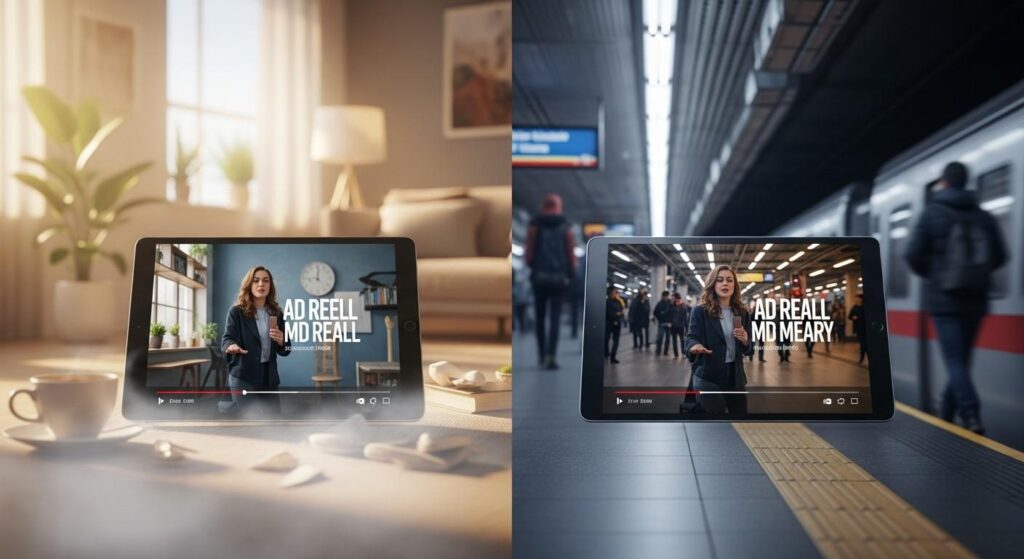
An ad on a living room TV lands differently than the same ad on a phone. An ad on a big screen has space and attention. In other, weaker settings, even good ads don’t stick. In stronger settings, the message is easier to absorb and easier to remember.
What Ad Recall Really Means
Ad recall comes down to one question: does someone remember the ad, and can they attribute it to the right brand? If the answer is no, nothing else really matters.
Ad Recall Explained Simply
Ad recall measures whether someone remembers seeing an ad and can correctly connect it to a brand. It’s about memory, not immediate action.
Strong ad recall answers three basic questions: do people remember the ad, do they connect it to the right brand, and does it leave a positive impression? When recall is weak, downstream metrics like consideration and purchase intent rarely improve on their own.
How Video Ads Actually Get Processed in Different Settings
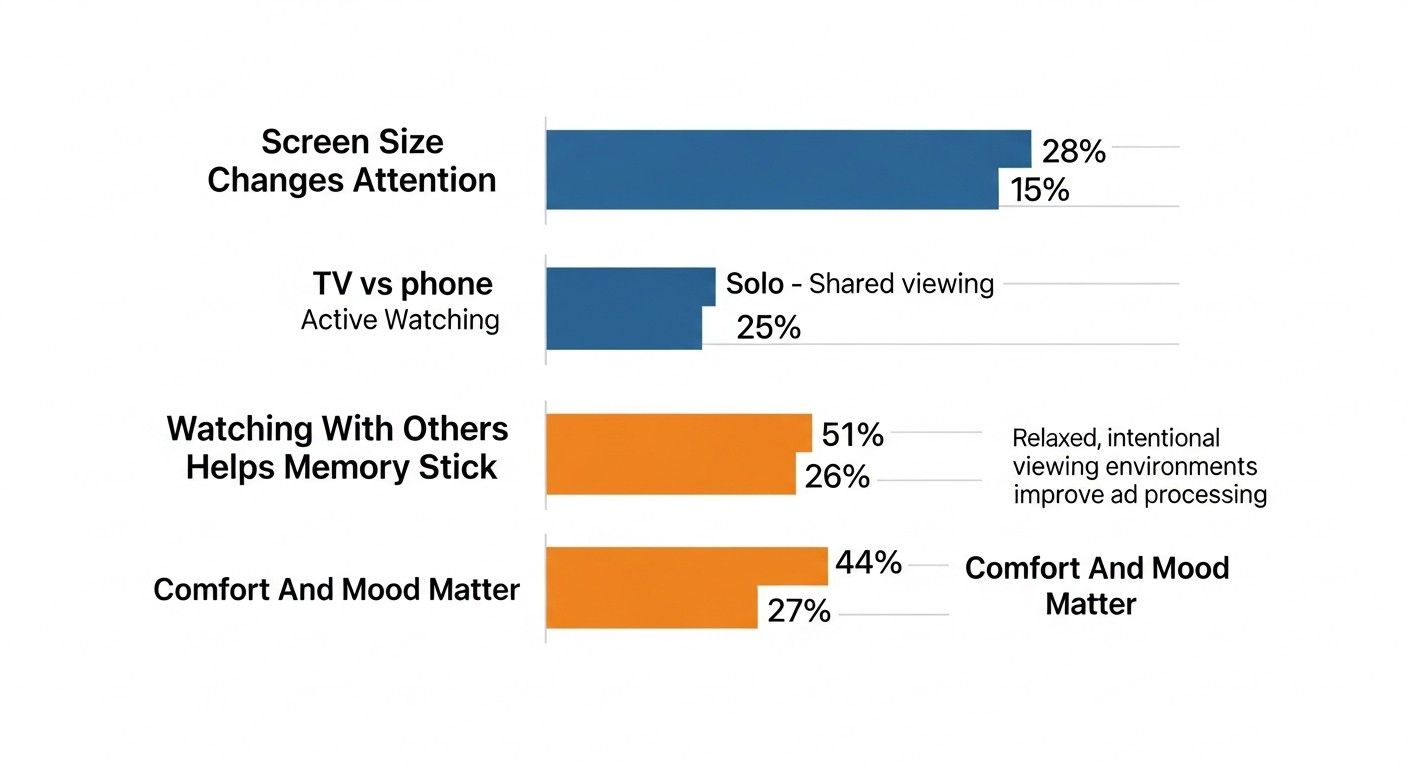
1. Screen Size Changes Attention
Ads seen on TV screens are remembered more often than those seen on phones, not because they look better, but because people are actually watching.
2. Watching With Others Helps Memory Stick
Watching alone is a passive experience. Watching with others adds another layer to it. People notice reactions around them, think about how the ad is coming across, and sometimes end up talking about it afterward. That shared moment helps the message stick in a way that a private interruption usually doesn’t.
3. Comfort And Mood Matter
Relaxed settings change how ads land. When someone is comfortable and viewing feels intentional, ads feel less disruptive and easier to process. There’s more room for the message to actually sink in.
Context doesn’t guarantee recall, but without it, recall rarely happens.
Why Professional Content Drives Stronger Brand Memory
Not all video content creates the same conditions for an ad to land. Professional, high-quality content leads to deeper engagement and higher trust. Viewers come to it with intention and expect something polished and coherent, which means ads feel less like interruptions and more like part of the experience. Research shows that ads placed within professionally produced content deliver significantly higher recall than ads shown next to lower-quality content, and trust levels rise along with it.
This is why context matters more than volume. Ten impressions in the wrong environment rarely outperform one impression in the right one.
Why TV and Living-Room Environments Still Win
Television hasn’t lost its power, it’s evolved. Today’s TV environment includes connected TVs, streaming platforms, and long-form digital video on large screens. What hasn’t changed is the cognitive impact of actually watching in that setting.
1. TV Screens Create Stronger Memory Encoding
Television viewing encourages sustained attention. Ads are more likely to be seen in full, heard clearly, and processed without constant interruption. Compared to mobile and desktop, TV ads benefit from longer viewing sessions, fewer competing distractions, and higher audio and visual engagement. Those factors are exactly what support long-term memory formation.
2. The Living Room Effect
The living room isn’t just a room, it’s a behavioral environment. It encourages shared viewing, supports relaxed mood states, and increases satisfaction with the content being watched. Those elements work together to produce stronger recall and more durable brand memory.
Research on in-home viewing consistently shows that the living room outperforms other spaces for ad effectiveness because it combines multiple memory-enhancing factors at once.
What This Means for YouTube Advertising
YouTube now operates across every major screen, from phones and desktops to tablets and connected TVs. That reach creates both opportunity and risk.
1. Not All YouTube Inventory Behaves the Same
Some YouTube placements function like television. Others behave more like social feeds. Ads shown within professional, long-form content benefit from the same cognitive advantages as traditional TV advertising, while ads placed next to low-quality or irrelevant content simply don’t. Without placement control, advertisers end up paying for impressions that never had the right conditions to generate memory in the first place.
2. Why Frequency Cannot Fix Weak Context
Increasing frequency doesn’t solve poor context. If an environment is suppressing attention and trust, repeating the ad just increases waste. Effective campaigns figure out where ads should appear before deciding how often they should appear.
Why Measurement Alone Is Not Enough
Platforms offer tools to measure ad recall and brand lift, and those tools provide useful signals. But they don’t explain why performance looks the way it does or what’s actually driving it.
1. What Brand Lift Studies Measure Well
Brand lift studies compare exposed and control audiences to track changes in awareness, recall, and intent. They’re useful for understanding whether a campaign moved the metrics that matter.
2. What Brand Lift Studies Cannot Explain
What measurement tools don’t tell you is which specific placements actually created recall, which channels suppressed memory, and where wasted impressions occurred. They report outcomes after the fact without preventing poor environments from being used in the first place.
How Filament Improves Ad Recall Through Context Control
Most tools try to improve performance after ads have already run, but by then it’s too late. If an ad shows up in the wrong environment, people never really process it, and no report can fix that. Filament works earlier in the process.
The focus is simple: avoid weak impressions before they happen.
Human-verified channel reviews catch what algorithms miss. Tone, intent, and content quality all matter when the goal is memory, not just compliance. Automation handles the scale, but humans make the final call.
Low-quality placements are removed daily. Kids’ content, irrelevant channels, and low-effort uploads quietly drain budget and suppress recall, so Filament excludes them continuously rather than as a one-time cleanup.
Contextual targeting matches real viewing behavior by aligning ads with professional, TV-grade environments where people are actually paying attention.
The result is fewer wasted impressions and better conditions for ads to be remembered.
The Future of Video Advertising Is Context-First
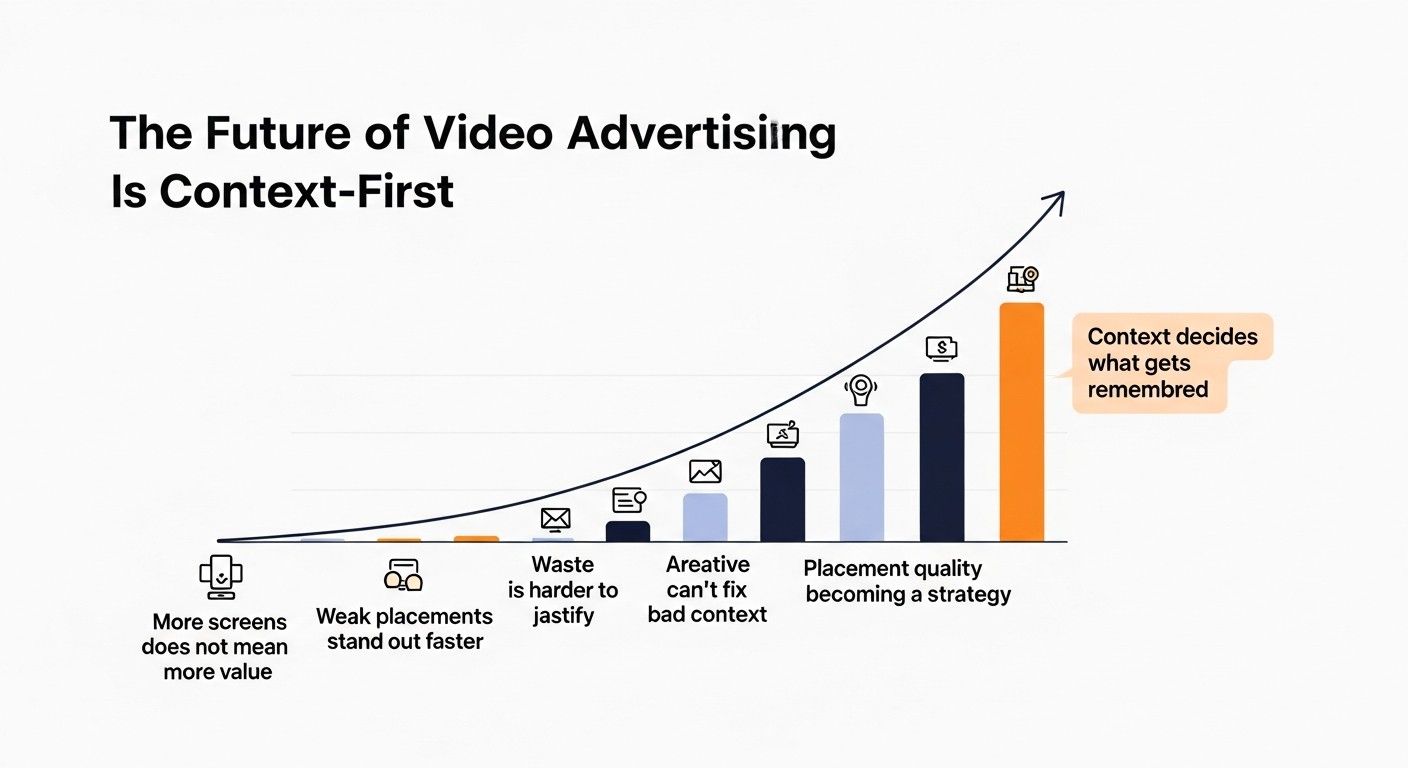
1. More screens does not mean more value
Video ads run everywhere now, but that doesn’t make every placement worth buying.
2. Weak placements stand out faster
As viewing shifts to TVs and long-form content, weak placements stand out faster. Low-quality environments don’t hide the way they used to.
3. Waste is harder to justify
Advertisers are less patient with impressions that technically deliver but never actually stick.
4. Creative can’t fix bad context
Strong ads still fail when they show up in the wrong place.
5. Placement quality is becoming a strategy
The campaigns that work pay attention to where ads appear, not just who they’re targeting.
6. Context decides what gets remembered
If the environment is wrong, memory never forms.
Context Determines Whether Ads Are Remembered
Good ads can still fall flat in the wrong environment. When people are distracted or barely watching, memory rarely forms, and that has nothing to do with the creative. Context sets the stage before the ad even plays.
More advertisers are starting to recognize that. The conversation is shifting away from squeezing performance out of campaigns after the fact and toward making sure ads run in environments where people are actually paying attention. That’s exactly what Filament is built for, helping advertisers control where their YouTube ads appear and avoid paying for impressions that never really had a shot.
If recall and efficiency matter, context is the place to start with Filament.
Frequently Asked Questions:
1. How does context affect ad recall in video advertising?
Context influences attention, trust, and depth of processing. Ads viewed in professional, TV-grade environments are recalled more often than ads shown in distracted or low-quality settings.
2. Why are TV and connected TV ads more memorable?
Larger screens, shared viewing, and relaxed environments support stronger memory encoding and longer attention spans.
3. Does content quality really impact brand memory?
Yes. Ads placed next to professional content generate higher recall and trust than ads shown next to non-professional or spam-like videos.
4. What is the difference between ad recall and brand lift?
Ad recall measures memory of an ad. Brand lift measures broader changes in awareness, consideration, and intent.
5. How does Filament improve ad recall on YouTube?
Filament ensures ads appear in human-verified, brand-safe, high-quality content where memory formation is more likely.

I’m a results-driven marketing leader with 10+ years of experience building integrated media strategies that drive measurable ROI. As COO and co-founder of Filament, I shape the product roadmap, sales, and campaign performance. My background spans brand and performance media for top brands like Slack, Bumble, and Jenny Craig. A frequent speaker on measurement, I bring deep expertise in ad tech, data strategy, and media buying—always with a sharp focus on business impact. Previously I founded an attribution company, where I led campaign planning, attribution modeling, and executive-level reporting across TV, digital, and CRM channels.