Brand awareness doesn’t struggle because brands can’t reach people anymore. Most brands can. The real issue is that ads often show up where they don’t belong.
On platforms like YouTube, people see ads all day. They skip them. They mute them. Sometimes they don’t even register them. That usually isn’t because the creative is bad. It’s because the ad feels disconnected from the video they chose to watch.
When ads fit the content around them, people react differently. That’s not an opinion. Research shows 74% of consumers prefer ads that match the content they’re viewing, and 72% say the surrounding content changes how they perceive the ad and the brand itself. Context does the work before the message even starts. If the environment feels wrong, the ad never really gets a chance.
This is where contextual video advertising makes a difference. It doesn’t chase users based on old behavior or assumptions. It looks at what someone is watching right now and places ads there. When an ad feels like it belongs, people don’t fight it. They notice it. They remember it. That’s exactly what upper-funnel brand building is supposed to do, especially in a privacy-first world.
Why Contextual Video Advertising Matters for Brand Building
Brand building is not about chasing users across the internet. It’s about earning attention in the right environment.
The Shift From Behavioral to Context-Based Advertising
Brand building is not about chasing users across the internet. It is about earning attention in the right environment.
For a long time, video ads worked by following people around. If someone searched for something, clicked something, or visited a site, ads showed up later based on that trail. It was efficient, but it wasn’t built for how people actually experience content.
That approach is wearing thin. Rules around data use are tighter. Cookies are going away. And many viewers are simply tired of feeling tracked. All of that changes how awareness campaigns need to work.
At the top of the funnel, the job isn’t to figure out who someone is. It’s to leave the right impression. Contextual video does that by paying attention to the video itself. What someone chose to watch. What they’re focused on at that moment.
That difference shows up in how ads are received. When a placement fits the content around it, the ad feels easier to accept. It doesn’t fight for attention. It borrows it. That’s why context plays such a big role in recall, trust, and whether a brand is remembered at all.
What “Upper-Funnel Brand Building” Really Means
Upper-funnel brand building is about awareness and memory.
It starts when someone encounters your brand for the first time and continues as recognition builds over time. Action comes later, when timing and need align.
At this stage, people are not shopping. They are watching content, learning, or exploring interests. Ads that interrupt this experience without relevance weaken brand perception. Ads that align with the content strengthen recall.
Thus, contextual video is very effective at the top of the funnel. It situates brands alongside the content that the audience is already interested in, be it through exploring new concepts, reading or lifestyle videos, or viewing long-form content.
Since contextual targeting is based on the content that is currently being watched and not on former behavior, it is able to target people during their peak moment of attention, which is precisely what the awareness campaigns want the most.
How Contextual Video Ads Work
Contextual video advertising places ads based on the content environment, not user identity.
Content-Driven Placements
Instead of tracking users, contextual systems analyze:
- Video topics and themes
- Channel focus and quality
- Language, tone, and subject matter
- Brand suitability signals
Ads are then matched to content environments where the message makes sense. This approach ensures that relevance is built into the placement itself.
Why This Works Better Than Traditional Targeting
Behavioral targeting relies on historical data. That data is often outdated, incomplete, or restricted by privacy controls. It also assumes that intent remains stable over time, which is rarely true.
Contextual targeting focuses on present attention. When someone is watching a video, their mindset is clear. Matching an ad to that moment increases engagement and reduces resistance.
The Importance of Human Verification
Automation is powerful, but it has limits. Algorithms struggle with nuance, tone, misinformation, and borderline brand-risk content. This is especially problematic on open platforms like YouTube.
Filament addresses this gap by combining automation with human verification. Every YouTube channel in Filament’s inventory is reviewed by people to confirm:
- Topic accuracy
- Brand safety
- Content quality
This human layer ensures contextual accuracy without sacrificing scale, which is critical for brand-safe awareness campaigns.
Key Benefits of Contextual Video for Brand Awareness
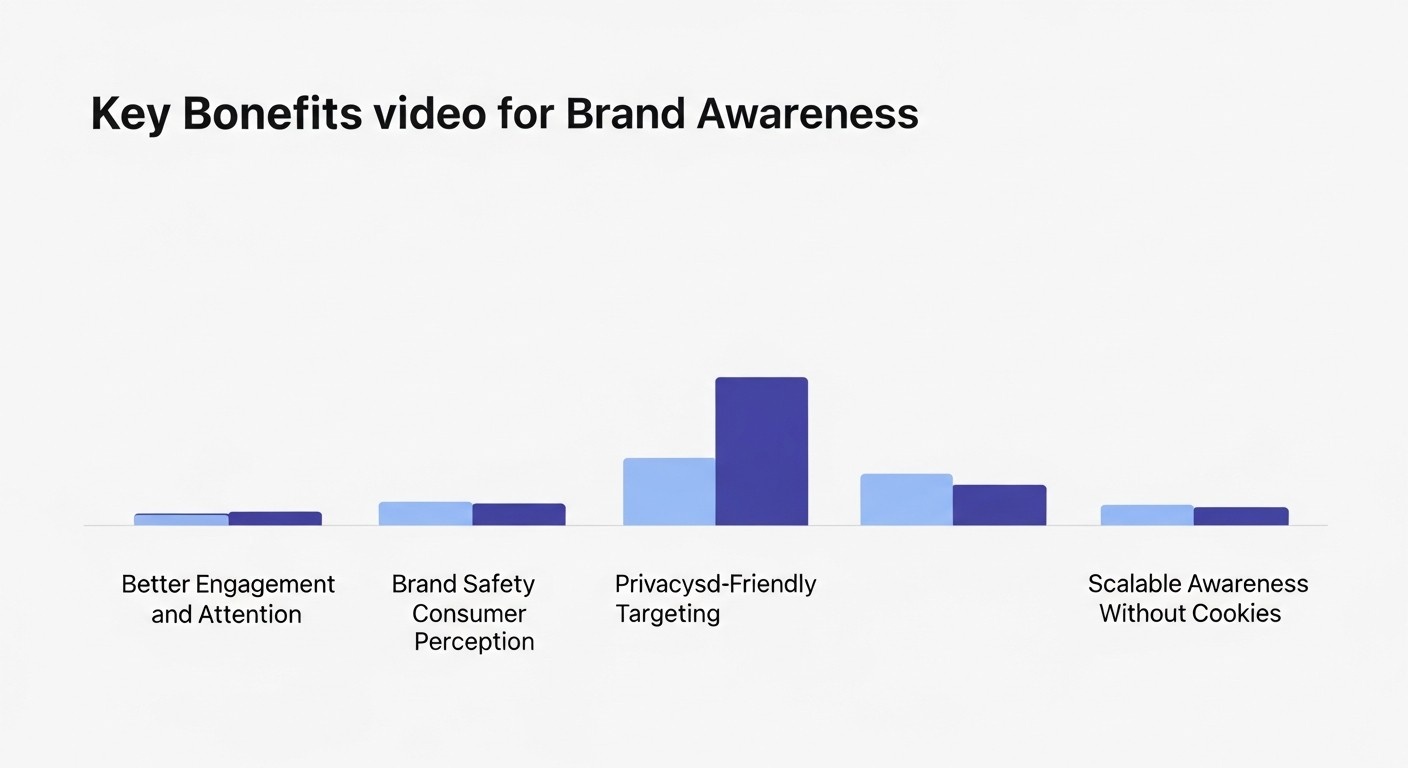
1. Better Engagement and Attention
Contextually relevant video ads feel like a natural extension of the content experience. Viewers are more likely to watch, absorb, and remember the message.
2. Brand Safety and Suitability
Brand awareness campaigns are especially sensitive to placement. A single unsafe or irrelevant adjacency can undermine trust.
Contextual video keeps ads near content that reinforces the brand message. Filament strengthens this with human-verified channel lists, daily exclusion controls, and a 99% brand-safe guarantee, ensuring that awareness is built in the right environments.
3. Improved Consumer Perception
When ads appear next to content viewers already trust or enjoy, that trust transfers to the brand. This improves recall and emotional association, which are core objectives of upper-funnel campaigns.
4. Privacy-Friendly Targeting
Contextual video does not rely on cookies or personal identifiers. Viewers feel less tracked and more comfortable engaging with the brand. In a privacy-first environment, that comfort directly impacts perception.
5. Scalable Awareness Without Cookies
As third-party cookies disappear, many audience-based strategies lose scale. Contextual video remains effective because it relies on content, not identity. This makes it a durable, future-proof approach to brand building.
Examples of Contextual Video Advertising in Action
Contextual relevance works across industries.
A fitness brand advertising alongside workout routines or wellness content feels helpful, not intrusive. A travel brand appearing next to destination guides aligns perfectly with exploration. A B2B brand running ads near educational industry content builds authority and trust.
In each case, the ad complements the viewing experience rather than interrupting it.
How Filament Powers Contextual Placements
Filament provides:
- Curated, human-verified YouTube and CTV inventory
- Contextual topic targeting
- Channel-level placement transparency
Advertisers know exactly where their ads appeared and why those placements were chosen. This transparency reinforces trust in both the platform and the campaign results.
Contextual Video vs Other Advertising Approaches
Comparison Table
Approach | How It Targets | Privacy Dependence | Best Use |
Behavioral Targeting | Past user behavior | High | Retargeting |
Audience Targeting | User segments | Medium | Broad reach |
Contextual Targeting | Content environment | None | Brand awareness |
Contextual vs Audience Targeting
Audience targeting performs well when strong data signals exist. Contextual targeting fills the gap when data is limited, privacy restrictions apply, or brands need a safer scale. For brand building, the environment often matters more than identity.
Best Practices for Contextual Video Campaigns
1. Choose Context That Reflects Brand Values
Where an ad shows up shapes how the brand is perceived. The surrounding content should match the brand’s tone and intent, not just its industry. When the environment feels right, the message lands more naturally and doesn’t have to work as hard.
2. Refresh Contextual Lists Regularly
YouTube content changes fast. Creators evolve, trends shift, and viewing habits move on. Contexts that worked a few months ago can quietly lose relevance, so reviewing and updating lists helps keep placements feeling current and credible.
3. Use Negative Filters
Not every video that fits a topic fits the brand. Negative filters help block content that feels low-quality, off-brand, or risky, even if it technically matches the category. Exclusions protect the message and prevent bad placements from diluting impact.
4. Combine With Other Funnel Tactics
Contextual video does its best work early, when people are forming impressions. Other formats can step in later, once awareness exists, and intent is clearer. Used together, relevance comes first, and action follows without being forced.
Measuring Success for Upper-Funnel Contextual Video
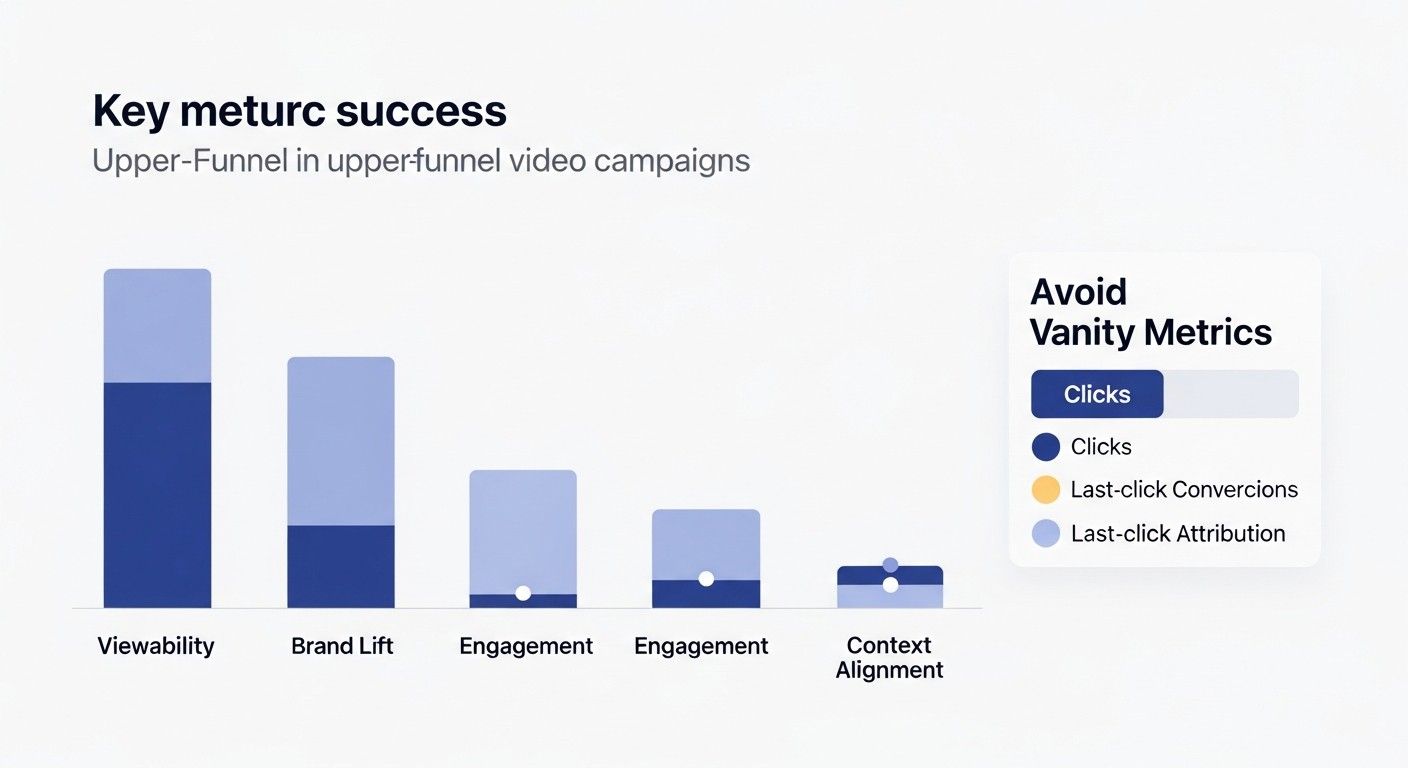
Upper-funnel campaigns need to be measured differently from performance media. At this stage, the goal is not to get someone to click or buy. It’s to make the brand familiar, credible, and easy to recognize later.
Metrics That Matter
The signals that matter most are about attention and environment:
1. Viewability: Did the ad actually show up in a place where people could see it, not just load?
2. Brand lift: Did more people remember the brand or recognize it after seeing the ad?
3. Engagement: Did viewers stay with the video or show signs of interest?
4. Context alignment: Did the ad appear next to content that made sense for the brand?
Taken together, these metrics help answer a simple question: Did the ad show up in the right place and get noticed?
Avoid Vanity Metrics
Some metrics look useful, but don’t tell the full story at the awareness stage:
1. Clicks, which often reward disruption rather than relevance
2. Conversions, which usually come much later in the journey
3. Last-click attribution, which ignores everything that happened before
At the upper funnel, success shows up as recognition and memory, not instant action. When the context is right, results tend to follow later without being forced.
Build Awareness Where Attention Lives
People don’t hate ads. They hate ads that feel out of place.
When a video ad shows up next to content someone chose to watch, it has a better chance of being noticed. It doesn’t feel like an interruption. It feels expected. That’s what helps brands get remembered instead of skipped.
This is where contextual video makes a difference. It focuses on placement first. Not on tracking people, not on guessing intent. Just on showing up in the right environments.
Filament applies this approach on YouTube by combining automation with human review. Channels are checked. Placements are visible. Brands know where their ads run and why.
If awareness matters, context matters too.
Frequently Asked Questions
1. What is contextual video advertising?
It means placing video ads next to content that matches what people are already watching, instead of targeting them based on personal data.
2. How does contextual video help with brand building?
It makes ads feel more relevant, which helps people notice the brand and remember it later.
3. Is contextual video privacy-safe?
Yes. It does not depend on cookies or personal identifiers.
4. Can contextual video be used with other strategies?
Yes. It works well early in the journey, while other formats can drive action later.
5.How should success be measured?
By looking at attention and awareness signals, such as viewability, engagement, and brand lift, not just clicks.

I’m a results-driven marketing leader with 10+ years of experience building integrated media strategies that drive measurable ROI. As COO and co-founder of Filament, I shape the product roadmap, sales, and campaign performance. My background spans brand and performance media for top brands like Slack, Bumble, and Jenny Craig. A frequent speaker on measurement, I bring deep expertise in ad tech, data strategy, and media buying—always with a sharp focus on business impact. Previously I founded an attribution company, where I led campaign planning, attribution modeling, and executive-level reporting across TV, digital, and CRM channels.