Brand safety usually doesn’t break because someone made a reckless call.
It breaks because people aren’t paying attention.
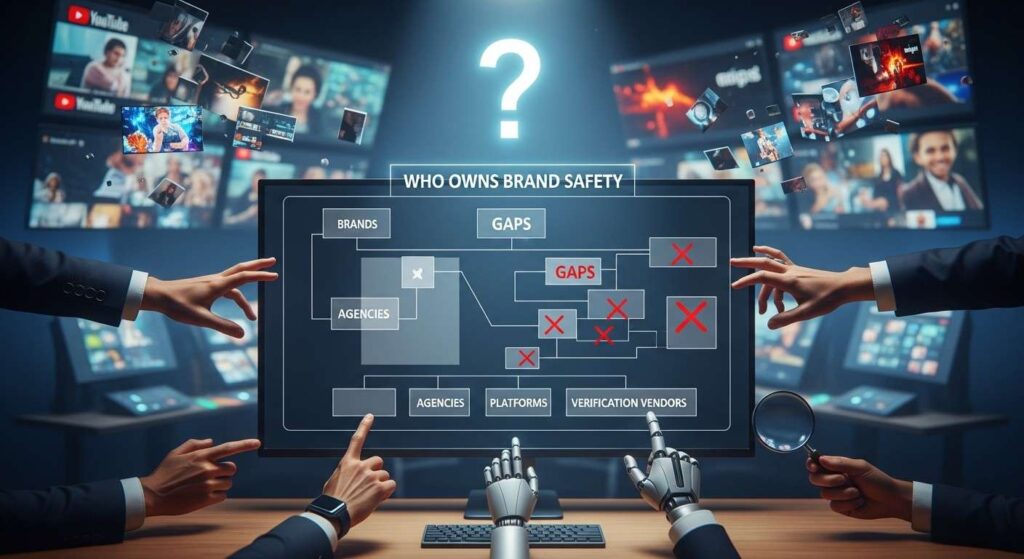
In most organizations, brand safety sits in no-mans-land. Brands care about it, but assume agencies are managing it. Agencies assume platform controls and verification tools are doing their job. Platforms rely on automation built for scale. Everyone is involved, yet no one fully owns the outcome.
That gap matters more today because ads are no longer consumed casually. According to Nielsen’s The Gauge report, television screens now account for the largest share of total video viewing time in the U.S., with streaming making up most of that usage.
When ads show up on the main screen in the home, placement carries more weight. People notice the surrounding content, and they associate it with the brand.
So the real question is no longer whether brand safety matters. It’s who is actually responsible for it.
Why Brand Safety Ownership Is Now a Business Issue, Not a Media Detail
For a long time, brand safety lived in the background. Avoid extreme categories. Apply standard exclusions. Review reports once the campaign wraps.
That approach worked when scale was smaller and media buying moved slower.
Today, it does not.
Modern campaigns can deliver thousands of placements before anyone reviews a single report. By the time a problem surfaces, impressions have already been served and the moment has passed. There is no rewind button for perception.
There is also a financial reality that often gets overlooked. The U.S. Federal Trade Commission has warned repeatedly that deceptive and low-quality digital advertising practices cost businesses billions of dollars every year.
That loss is not limited to fraud. A large share comes from ads running in places that simply do not work. Low-quality channels. Irrelevant content. Audiences that were never a fit to begin with.
Brand safety today is tied directly to efficiency. When placements are misaligned, money is wasted quietly and consistently.
What Brand Safety Actually Means When You Strip Away the Jargon
Many teams still talk about brand safety as if it is a switch: safe or unsafe, allowed or blocked. That view misses the real issue.
Brand Safety and Brand Suitability Are Not the Same Thing
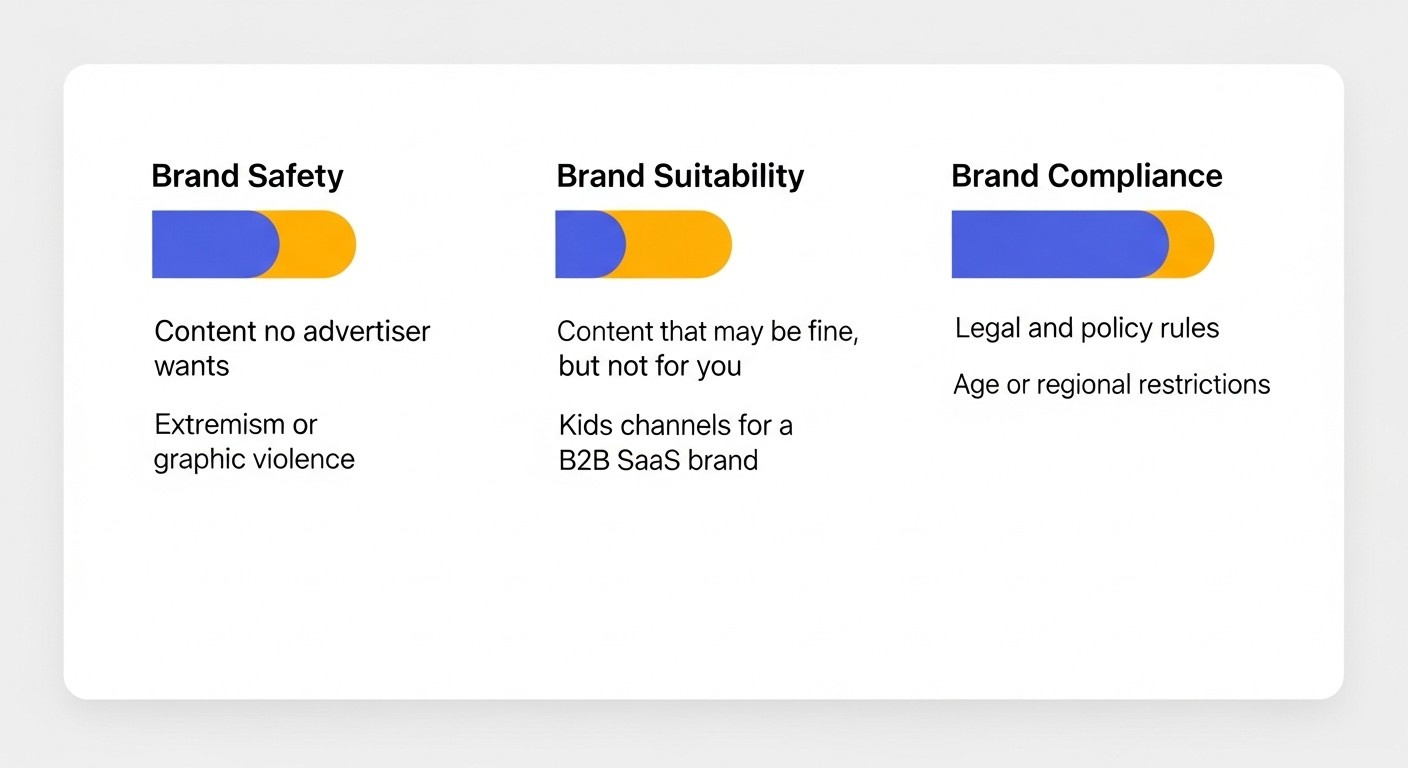
Brand safety is about avoiding content that is broadly unacceptable for advertising. Content most brands agree they do not want to be associated with. Brand suitability is more specific. It asks whether a placement makes sense for a particular brand, a particular audience, and a particular goal.
A placement can be brand-safe and still be a poor choice.
To make this clearer:
Term | What It Means in Practice | Example |
Brand Safety | Content no advertiser wants | Extremism or graphic violence |
Brand Suitability | Content that may be fine, but not for you | Kids channels for a B2B SaaS brand |
Brand Compliance | Legal and policy rules | Age or regional restrictions |
Most problems do not come from ads appearing next to obviously unsafe content. They come from ads appearing next to content that does not fit. Content that technically passes filters but fails context.
Compliance Does Not Equal Good Judgment
Following the rules doesn’t mean the placement was a good idea. An ad can be compliant and still land in the wrong moment, next to the wrong content, in front of the wrong audience. Compliance helps brands avoid penalties. Suitability is what keeps a campaign from feeling off or underperforming.
How Brand Safety Responsibility Gets Spread Thin
Brand safety sits inside a crowded ecosystem, and each participant touches it in some way.
Brands define values and risk tolerance. Agencies plan and execute campaigns. Platforms automate delivery at scale. Verification vendors enforce specific signals around fraud, viewability, and suitability. Industry bodies such as the Interactive Advertising Bureau define standards and best practices. They do not, however, decide where ads should actually run.
Here is where the problem starts.
Who Controls What, and Where the Gaps Appear
Stakeholder | What They Handle | What They Don’t See |
Brands | Values and accountability | Day-to-day placement detail |
Agencies | Planning and optimization | Full platform-level context |
Platforms | Delivery algorithms | Brand-specific nuance |
Verification Vendors | Measurement and enforcement | Strategic placement decisions |
Each layer plays a role. No layer sees the full picture. And without a clear owner, decisions default to automation.
Why “Shared Responsibility” Sounds Good but Often Fails
Shared responsibility suggests collaboration. In practice, it often creates blind spots.
1. Responsibility Gets Handed Off Quietly
Brands assume agencies are watching placements closely. Agencies assume platform controls and verification tools are sufficient. Platforms assume advertisers have clearly defined acceptable risk.
No one explicitly says, “This is the line we will not cross.”
2. Speed Leaves No Room for Fixes
Most reviews happen after delivery. Reports are examined days or weeks later. By that point, impressions have been served and budgets spent.
Reactive oversight cannot keep up with automated buying.
3. The Real Risk Lives in the Gray Areas
Algorithms are good at identifying extremes. They struggle with nuance. Context, tone, and relevance are difficult to model, especially at scale.
This is where most waste hides. Not in content that should never be monetized, but in content that simply does not belong in the campaign.
Why YouTube Makes Brand Safety Harder Than It Looks
YouTube adds layers of complexity that many advertisers underestimate.
The sheer volume of content is enormous. New channels appear constantly. Topics shift quickly. Algorithms prioritize engagement, not alignment.
A single campaign can touch thousands of channels in a short period of time. Formats vary as well, from long-form videos to Shorts to connected TV inventory. Each carries different contextual risks.
Because YouTube is often watched on shared screens, misalignment is more noticeable. Viewers are not skimming. They are watching and often with others. That makes placement decisions more visible and more memorable.
On YouTube, where an ad appears matters as much as what it says.
A Brand Safety Governance Approach That Holds Up in the Real World
Effective brand safety is not about eliminating risk. It is about managing risk intentionally.
1. Ownership Has to Live With the Brand
Agencies can execute. Platforms can automate. Vendors can verify.
But the decision about acceptable risk must stay with the advertiser. When ownership is clear, decisions are faster and accountability is understood.
2. Safety Rules and Suitability Rules Should Be Separate
Different campaigns carry different risks. Governance should reflect that.
Campaign Goal | Primary Risk | What Needs Attention |
Awareness | Perception | Quality and adjacency |
Consideration | Credibility | Topic and Context fit |
Performance | Waste | Tight exclusions |
Applying the same controls everywhere leads to poor outcomes. Either reach is restricted unnecessarily or the budget is wasted.
3. Placement Intelligence Fills the Missing Gap
Verification tools confirm whether impressions meet technical standards. Placement intelligence looks at where ads actually ran and whether those environments made sense.
That distinction matters. It shifts brand safety from reactive reporting to proactive control.
4. Controls Need to Run Continuously
Static blocklists age quickly. Content ecosystems change every day. Strong governance relies on ongoing review, daily exclusions, and adaptive controls that respond to what is actually happening.
5. Measurement Should Reflect Alignment, Not Just Volume
Impressions alone do not tell the story. Placement relevance, waste reduction, and channel-level visibility reveal whether governance is working.
Where Filament Fits Into Brand Safety Governance
Filament strengthens the placement intelligence layer for YouTube advertising.
It is not an agency and does not manage media buying. It does not replace verification vendors. It focuses on understanding where ads actually appear and whether those environments make sense.
1. Human-Verified YouTube Placement Intelligence
Filament combines automation with human review. Automation provides scale. Human verification catches nuance. That combination is critical in the gray areas where algorithms fall short.
2. Visibility That Supports Better Decisions
By surfacing channel-level placement data, Filament helps brands and agencies see patterns that are otherwise easy to miss. Misalignment becomes easier to spot. Adjustments become easier to make.
3. Flexibility Across Campaign Objectives
Awareness, consideration, and performance campaigns require different controls. Filament supports that flexibility without forcing a single set of rules across every use case.
Where Brand Safety Assumptions Break Down in Practice
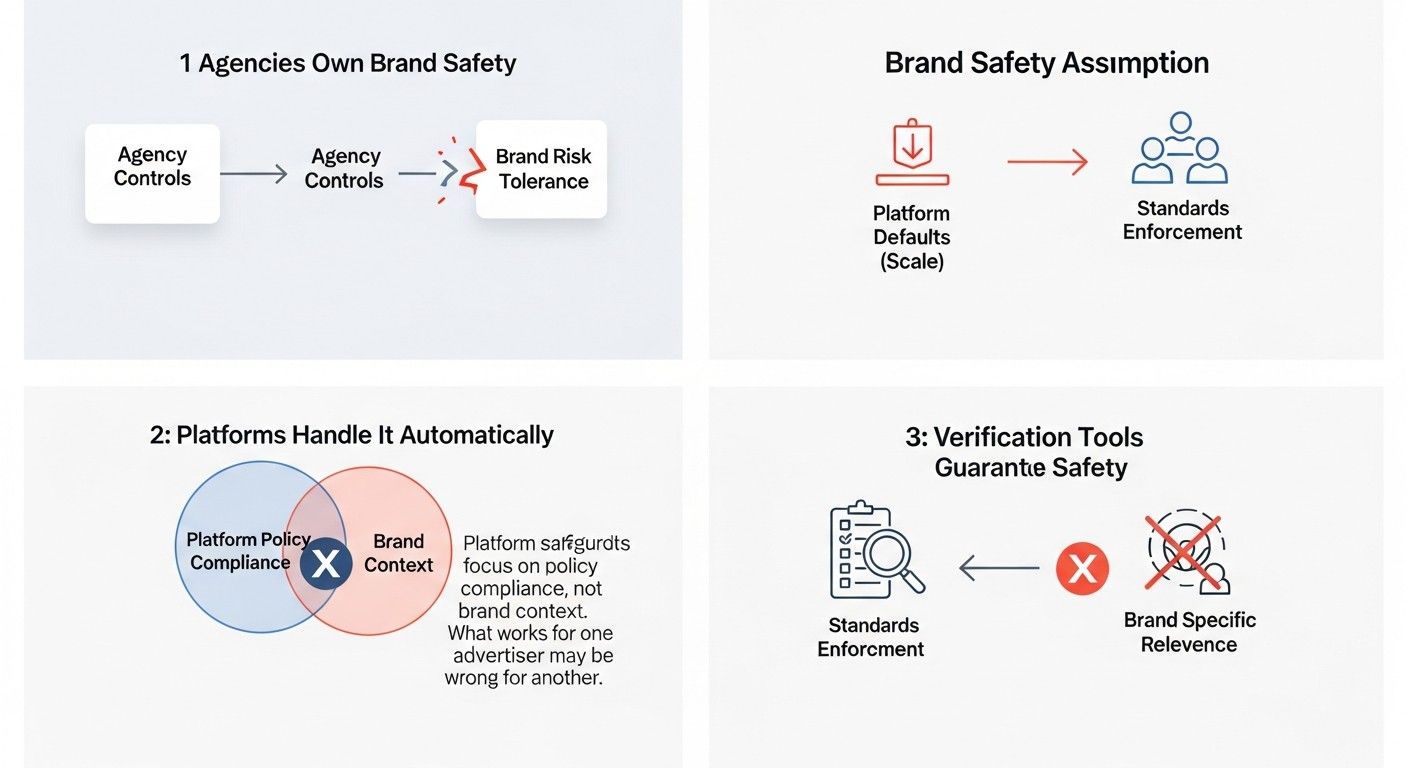
Most brand safety failures come from unchallenged assumptions.
1. Agencies own brand safety.
Agencies execute controls, but they don’t define a brand’s risk tolerance. When that’s missing, they default to platform settings built for scale.
2. Platforms handle it automatically.
Platform safeguards focus on policy compliance, not brand context. What works for one advertiser may be wrong for another.
3. Verification tools guarantee safety.
Verification tools enforce standards. They don’t decide whether a placement actually makes sense for the brand.
4. No flags means no problem.
Many poor placements never trigger violations. They simply waste budget or dilute impact.
What Clear Brand Safety Ownership Looks Like
Strong ownership shows up in execution, not policy docs.
- Risk tolerance is defined before campaigns launch.
- Exclusions are reviewed continuously, not set once.
- Adjustments happen while campaigns are live.
- Automation handles scale, humans handle nuance.
- Responsibility is explicit when something feels off.
In this setup, brand safety reduces waste instead of slowing campaigns down.
Conclusion: Brand Safety Is Ultimately a Brand Decision
Brand safety does not belong to a platform, a tool, or an agency alone.
It belongs to the advertiser.
Agencies execute. Platforms deliver scale. Vendors verify signals. Brands decide where they show up and accept responsibility for the outcome.
For advertisers who want real control over YouTube placements, governance starts with visibility. Filament helps brands see where ads run, reduce waste, and apply human judgment at scale.
Request a YouTube placement audit or schedule a demo to understand what stronger brand safety governance looks like in practice.
Frequently Asked Questions:
1. Who is ultimately responsible for brand safety?
The advertiser is ultimately responsible, because brands define risk tolerance and own the reputational and financial impact.
2. What is the difference between brand safety and brand suitability?
Brand safety avoids universally harmful content. Brand suitability focuses on whether a placement aligns with a specific brand’s values and goals.
3. Can agencies fully manage brand safety for advertisers?
Agencies can manage execution and optimization, but accountability should remain with the brand.
4. Do verification tools guarantee brand safety?
No. They reduce risk, but they do not fully evaluate context or brand alignment.
5. Why is brand safety more complex on YouTube than on other channels?
The scale, diversity of content, and shared viewing environment make placement decisions more visible and more impactful.

I’m a results-driven marketing leader with 10+ years of experience building integrated media strategies that drive measurable ROI. As COO and co-founder of Filament, I shape the product roadmap, sales, and campaign performance. My background spans brand and performance media for top brands like Slack, Bumble, and Jenny Craig. A frequent speaker on measurement, I bring deep expertise in ad tech, data strategy, and media buying—always with a sharp focus on business impact. Previously I founded an attribution company, where I led campaign planning, attribution modeling, and executive-level reporting across TV, digital, and CRM channels.