Brand safety is likely one of the first things you think of in digital advertising. The reason for brand safety is easy to understand. With brand safety, you never want a well-thought-out campaign to end up next to extremist material or harmful content, because of the risk of something as small as a single misplacement leading to a social media uproar. And no one wants to put their brand at risk.
Here’s something a bit more discomforting: trying not to face any risk has been the focus of an entire industry, and as a result, a completely different sort of damage has been created. Advertisers have blocked themselves from high-quality, contextually appropriate, and brand-appropriate content in the quest for safety. News content is a prime example of this.
This is known as over-blocking, and over-blocking is silently inflating costs for brands when it comes to lost reach, wasted impressions, and lost opportunities to engage their customers. Over-blocking hinders performance, narrows the range of voices, and pushes ad dollars away from credible publishers and towards cheaper, less effective inventory.
Moving the discussion from “safety at all costs” to “safe and suitable” unlocks advertisers from fear-driven budgeting and allows them to create data-driven campaigns with purpose and impact. That philosophy fuels Filament, which utilizes technology alongside human review to assist advertisers in striking this equilibrium on platforms such as YouTube.
Understanding Contextual vs. Audience Targeting
How Over-Blocking Happens

Over-blocking isn’t the result of malicious intent. It comes from tools and policies designed to protect brands, but implemented too bluntly. Let’s unpack the most common ways it happens:
1. Overzealous Keyword Blocklists
Keyword blocklists are one of the oldest brand safety tools. Brands create lists of words they never want to be associated with, terms like “death,” “sex,” or “violence.” On the surface, this seems logical. But in practice, it strips context away.
- A video covering breast cancer awareness gets flagged for the word “breast.”
- A news clip about the Olympic shooting competition is blocked because of the word “shooting.”
- A documentary on war veterans’ resilience is excluded because “war” appears in the title.
In each case, the advertiser loses out on reaching engaged, relevant audiences, not because the content is unsafe, but because the filter can’t understand nuance.
2. AI Overreach and False Positives
AI-driven classifiers have become central to brand safety. They scan and label content at scale, automatically excluding what’s deemed risky. The problem? Machines often lack the ability to distinguish between harmful content and sensitive-but-valuable content.
Topics like mental health, LGBTQ+ stories, or social justice often get swept into the “unsafe” bucket despite being safe, powerful, and deeply relevant to many audiences. This automated exclusion is a major barrier for brands trying to connect authentically with diverse communities.
3. One-Size-Fits-All Standards
Brand suitability is not universal. A luxury brand may want a pristine, family-friendly environment. A video game company may thrive alongside edgier, action-heavy content. But traditional safety tools treat all brands the same, imposing overly strict standards across the board.
This uniformity leads to over-protection, where brands that could benefit from contextual richness are boxed into generic, sanitized environments.
4. Fear-Driven Overcorrection
Sometimes the issue isn’t the technology. Out of fear of PR backlash, marketers apply maximum exclusions. Better to block too much than too little, they think. But this short-term caution often leads to long-term underperformance.
The irony? The same brands worried about appearing on a “risky” video might unknowingly waste half their budget on low-quality, irrelevant placements like unboxing compilations or mukbang channels, environments that are “safe” but hardly suitable.
The Cost of Over-Blocking
Over-blocking isn’t just an efficiency problem; it affects every part of the digital ecosystem.
For Brands
- Lost Reach: They miss those who are safe, relevant, and highly audiences engaged with audiences.
- Budget Drain: Ads get funneled into generic, low-CPM filler content that rarely drives meaningful outcomes.
- Weaker ROI: Campaigns underperform compared to their potential because inventory is artificially restricted.
For Creators
- Unfair Demonetization: Safe creators, especially in sensitive categories like news, health, or social issues, lose income because their work is misclassified.
- Forced Censorship: To stay “ad-friendly,” creators dilute their authenticity, avoiding important topics altogether.
For Consumers
- Less Relevant Ads: Instead of ads tailored to their interests, viewers see generic placements disconnected from the content they’re watching.
- Eroded Experience: When ads feel intrusive or irrelevant, audience trust erodes.
For the Industry
- Stalled Innovation: Diverse voices and niche content don’t receive fair monetization, leaving the same narrow types of content overfunded.
- Broken Trust in Safety Tech: As advertisers realize their dollars are being misused, confidence in traditional safety tools diminishes.
In short, what was designed as a protective measure acts like a grip on growth, creativity, and relevance.
Why Safety ≠ Suitability
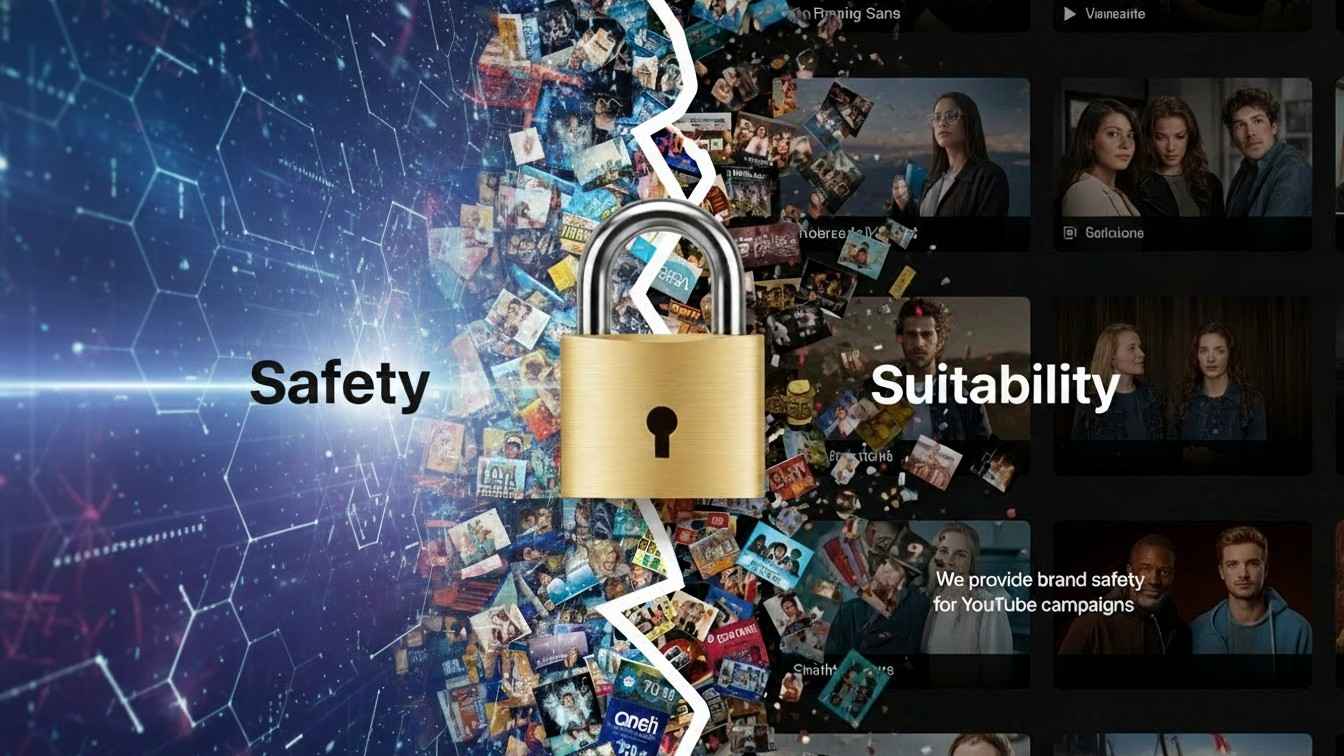
The industry’s mistake lies in equating safety with suitability. They are related but distinct.
- Brand Safety: Avoiding harmful or offensive content.
- Brand Suitability: Ensuring content aligns with a brand’s values, tone, and audience.
Think of it like this:
- A kids’ cereal brand would find a news debate on climate change safe but unsuitable.
- A renewable energy brand would consider the same debate both safe and suitable.
- An alcohol brand would consider a cooking show suitable, but not a channel for children, even though both are safe.
Suitability introduces nuance. It acknowledges that the same piece of content can be a perfect fit for one brand but a poor fit for another.
Filament’s Approach: Balancing Safety with Suitability
This is where Filament differentiates itself. Instead of treating brand safety as a binary “yes/no,” Filament helps advertisers find placements that are both safe and contextually suitable.
1. Daily Exclusion List (DEL)
Filament updates exclusions daily, removing unsafe or junk content while preserving safe but valuable inventory. Advertisers avoid wasting money on low-quality channels without over-blocking opportunities.
2. Contextual Targeting Beyond Keywords
With 500+ nuanced categories, Filament goes deeper than simple keyword filtering. Advertisers can reach audiences by intent, theme, and creator quality, ensuring that “fitness” ads land on motivational content, not unsafe or gimmicky channels.
3. YouTube Channel Audits
By auditing ad placements at the channel level, Filament reveals where brands are wasting budget and where they’re missing opportunities. It turns the non-transparent YouTube placements into a visible, fixable problem.
4. Safe-but-Suitable Playbooks
Filament doesn’t just exclude content. It helps brands design custom suitability profiles. This means advertisers get campaigns aligned with their own risk tolerance instead of someone else’s default settings.
The Safe-but-Suitable Targeting Checklist
Here’s a practical checklist to avoid over-blocking while maintaining integrity:
Define Your Suitability Tolerance
- Identify your “red zones” (absolutely off-limits topics).
- Define your “gray zones” (sensitive but potentially suitable).
- Outline your “green zones” (safe and ideal fits).
Audit Past Campaigns
- Review historical placements.
- Spot wasted spend on irrelevant or low-quality content.
- Identify missed opportunities due to unnecessary exclusions.
Go Beyond Blocklists
- Use contextual targeting instead of keyword-only filtering.
- Prioritize channels with proven credibility and audience trust.
Create Tiered Standards
- Allow different safety tolerances by campaign type.
- Example: awareness campaigns = stricter; performance campaigns = more flexible.
Leverage Human + Machine Review
- Don’t rely solely on automation.
- Add human oversight to capture nuance that machines miss.
Refresh Frequently
- Suitability shifts with culture, news cycles, and brand strategy.
- Revisit exclusions regularly rather than relying on static rules.
Measure Attention, Not Just Avoidance
- Go beyond impressions and clicks.
- Track metrics like attention time, emotional response, and brand lift.
From Fear to Growth: A New Mindset
The industry’s fixation on safety has bred fear. Fear of backlash. Fear of risk. Fear of mistakes. But fear-driven decisions rarely drive growth.
Instead of treating safety as a wall, advertisers should treat suitability as a bridge that connects brands with the right audiences in meaningful environments.
When you stop asking, “How do we avoid risk at all costs?” and start asking, “Where can our brand show up authentically and effectively?” the equation changes. You move from defensive advertising to strategic advertising.
Conclusion: Rethinking the Future of Brand Safety
Over-blocking is one of the digital ad industry’s hidden costs. It drains budgets, limits diversity, and prevents brands from making authentic connections. Worse, it convinces marketers they’re “playing it safe,” when they’re simply underperforming.
The way forward isn’t to abandon safety. It is to distinguish between what’s merely safe and what’s truly suitable. It is to stop treating content as risky by default and start recognizing nuance.
Platforms like Filament show that balance is possible: advertisers can protect brand integrity and expand performance by combining intelligent tech with human insight.
Ultimately, brand safety should be a tool for growth. And suitability is the missing piece that ensures advertising avoids harm and actively delivers value.
Frequently Asked Questions
1. What is the issue of over-blocking in brand safety?
Over-blocking occurs when an ad fails to appear on safe and appropriate content due to an overly cautious ad safety system or rigid block lists. Over-blocking results in inefficient spend, missed marketing opportunities, and weaker overall campaign performance.
3. In what ways does over-blocking harm brands?
It harms brands by shrinking the advertising reach, decreasing ROI, and forcing ads into irrelevant or low-quality inventory. Rather than protecting brands, over-blocking stifles performance and keeps the brands away from authentic and engaging environments where the audience can be reached.
3. In what ways is brand suitability different from brand safety?
Brand safety focuses on preventing advertising in harmful contexts, while brand suitability focuses on advertising in contexts that fit the brand’s values, tone, and intended audience. Suitability goes further in defining what is appropriate beyond mere avoidance.
4. How does Filament address the over-blocking issue?
Filament integrates human review with technology in order to identify and remove unsafe or junk content while retaining safe and contextually appropriate placements. Tools such as the Daily Exclusion List, channel audits, and contextual targeting ensure advertisers avoid unnecessary spending and enhance overall campaign results.
5. How to prevent over-blocking?
Advertisers need to set their compatibility tolerance, review previous placements, move past simple keyword blacklists, implement graduated safety policies, and perform machine and human checks. The biggest factor is that they should focus on attention and context fit.

I’m a results-driven marketing leader with 10+ years of experience building integrated media strategies that drive measurable ROI. As COO and co-founder of Filament, I shape the product roadmap, sales, and campaign performance. My background spans brand and performance media for top brands like Slack, Bumble, and Jenny Craig. A frequent speaker on measurement, I bring deep expertise in ad tech, data strategy, and media buying—always with a sharp focus on business impact. Previously I founded an attribution company, where I led campaign planning, attribution modeling, and executive-level reporting across TV, digital, and CRM channels.